

Moving is stressful for everyone! Setting up utilities, closing on a home, and the never-ending packing/unpacking? It’s ALOT! If your child’s neurodivergent, these transitions can hit especially hard.
Your child is doing their best with the tools they have—even the tough moments are their needs speaking. When we plan ahead for the stress? We don’t just make it easier… we open up moments for connection and growth
Focus on Proactive Preparation
- You know your child best, and they communicate with us through their behavior. Some children need a lot of lead time, while others prefer not to know too soon because it just prolongs the anxiety.
- Once you start packing and your child’s life will be impacted, we definitely recommend a conversation. Some children might benefit from knowing ahead of this, while others would prefer to wait.
- Set aside time for them to ask questions, express frustration, and even grieve. Rituals can be exceptionally helpful, especially for neurodivergent people, so don’t be afraid to be a little “woowoo” or silly when it comes to grief.
- Write a letter as a family to the house and thank it for all it’s done for you, or make a list of things you want to do in your new house. There’s no right or wrong way… just give your child an opportunity to process and see you process.
Utilize Tools
- We love social stories to discuss big changes, and moves are at the top of the list! All you need to do is add a few pictures of your old house and the new house. Tell your child what to expect and use clipart or photos to help.
- If you choose not to do a social story, showing your child photos of their new house can be very helpful. Show them where they’ll brush their teeth, where you’ll keep their favorite snacks, and where you think they’ll really enjoy playing.
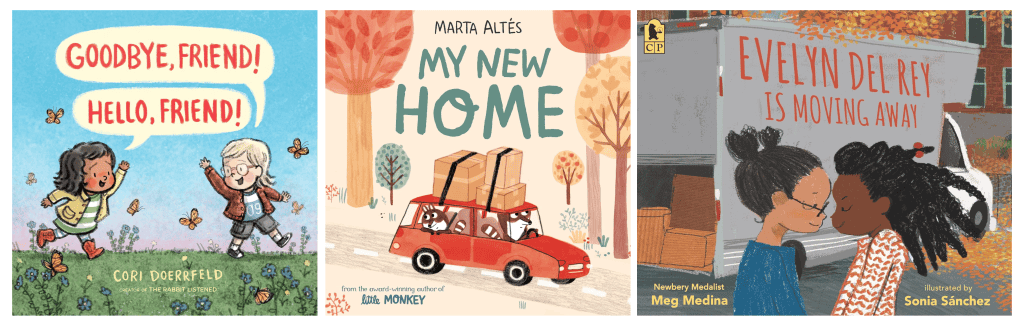
- Share picture books with them. Books are a great way to introduce a discussion, talk about the characters’ emotions, and give children an accessible way to process. Here are some of our favorites:
Focus On Things That Won’t Change
- Lots of things will change with a move, but a lot won’t. Remind your child which things won’t change.
- Brainstorm a list of “Things That Will Change” and “Things That Won’t Change.” You might be surprised what they come up with!
- Remind them: “Our family will stay together. The people you love will still love you, and we’ll still tuck you in at night and give you big hugs when you need them!”
- Regularly say: “You’ll still have all your things. Just because we’re moving doesn’t mean you won’t have your favorite Lego set or stuffed animals. They’ll be in a new room, but your toys will be the same!”
Give Ownership and Autonomy Where You Can
- Allow your child to pack a bag of things they don’t want packed—a small rolling suitcase works great, or even grocery bags for a cheaper option!
- Let your child decide how to label their boxes and sort their toys.
- Allow them to choose how to set up their new room (if possible.)
- You might find your child needs even MORE control during this time, so things that aren’t typically necessary become extra important.
Keep Things As Consistent As Possible
- Even on a cross-country road trip, try to find a few anchors for your child. Keep your normal bedtime stories, morning snuggles, or pizza Fridays as much as possible.
- When routines are hard to maintain, focus on predictability:
- Create a “moving week” picture schedule (clip art or phone photos work!).
- Pack a “regulation toolkit”: favorite blanket, noise-canceling headphones, sour candy.
Remember: For neurodivergent brains, familiarity = safety. A 5-minute walk after breakfast can steady their world when nothing else does.
Make Space for Big Emotions
- Try to find extra grace for everyone…including yourself. Pause when meltdowns erupt and ask, “What do we need right now?”
- Regulation tools that actually work mid-chaos:
- Walks: “Let’s step outside and watch clouds for 5 minutes.”
- Breathwork: Take a few minutes to breath…4 seconds in, hold for 4 seconds and 4 seconds out.
- Dance parties: Crank up your favorite music and shake out the stress.
Lean on Trusted Experts
That’s where Trailogy comes in. We offer Relocation Packages to take the guesswork out of everything—from picking the right neighborhood to connecting with new therapists and ensuring continuity of care. Research providers and schools ahead of time so you can rebuild routines quickly.
Your Next Step
Sign up for a free consultation and learn more about our Relocation Packages.
We’ll handle the logistics. You focus on the important stuff—like finding the perfect spot in your living room for a family game night!